
So this blog will be different than my last few but still very fun and interesting. Growing up, while I was in school, I have always had this interest in Ancient Egypt. I am not sure if it has to do with how cool the pyramids are, the glory of the pharaohs, the hieroglyphics, or simply the civilization they created. Nonetheless, the history of Egypt has always caught my interest. In the future I am sure I’ll revisit some Egyptian topics but for today we are going to focus on Pharaoh Hatshepsut, the first female to attain full pharaoh powers to rule Egypt.
Before Pharaoh Status
Hatshepsut, which means “Foremost of noble ladies” was the eldest daughter of Thutmose I. At the age of 12, she married her half brother Thutmose II, and became queen of Egypt after her fathers death. Thutmose II died young and the throne was given to his infant son, Hatshepsut’s step son, Thutmose III. As is tradition Hatshepsut would oversee affairs until Thutmose III would come of age. Years later, Hatshepsut took the title and full powers of a pharaoh, become co-ruler of Egypt with her step son. It is speculated by scholars that this may have happened due to her ambition, or more recent scholars believe it was due to a political crisis that would threaten the royal family, and Hatshepsut acted to save the throne for her stepson. She would use propaganda to further legitimize her claim to the throne by depicting herself looking like a man with a beard and big muscles in all of her statues and paintings.
Trade Expansion
Hatshepsut would use the military to explore new trade routes, at the time sending them to the land known as Punt, possibly modern day Eritrea. The expedition would be a successful one bringing back riches of gold, ivory, leopard skin. frankincense, and myrrh. She famously would grind up charred frankincense and use the resin as eyeliner. The expedition also brought back exotic animals, such as apes, panthers, and giraffes.
This ambitious journey brought her popularity and helped take Egypt into prosperity. With financial support Hatshepsut was able to pursue other major projects, such as some legendary Egyptian architecture.
Architecture Projects
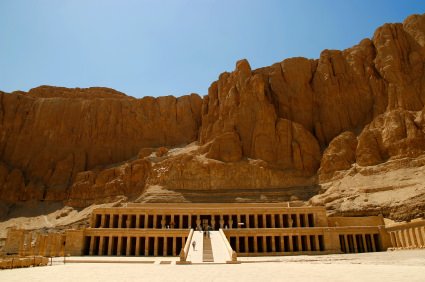
The Deir el-Bahr, meaning northern monastery is located in Thebes on the western bank on the Nile. Here lies the memorial temple of Pharaoh Mentuhotep II as of the 21st century BC. It is here where Hatshepsut would build her own mortuary temple, Djeser-Djeseru, meaning Holy of Holies, an architectural wonder of ancient Egypt. The site was strategically chosen as a way to connect herself to the prestigious lineage of Mentuhotep II, legitimize her rule as a female pharaoh, all while utilizing the natural setting of the cliffs to create the visually impressive monument.
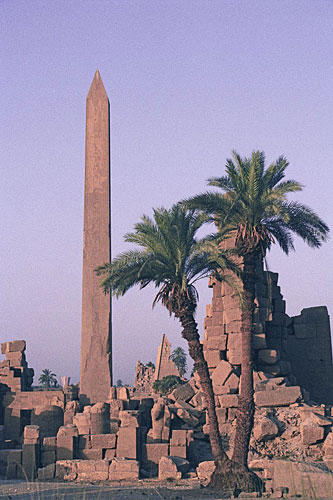
Additionally, she would oversee the constructions of many obelisks, statues, monuments, and restoration projects in both upper and lower Egypt. She would construct temples to build her religious base and legitimacy. At these temples she preformed religious rituals reserved for kings, creating a stronger appearance and ruling as a traditional male pharaoh.
Hatshepsut’s Eradication from History
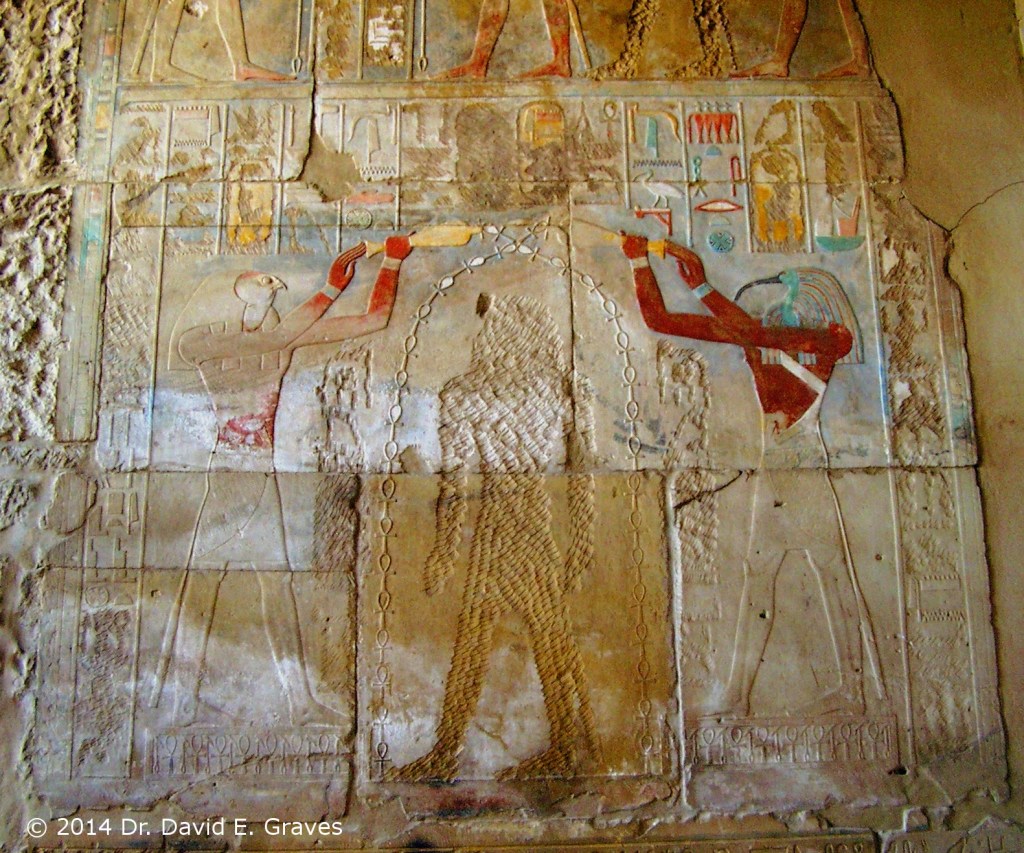
Even though Hatshepsut would have a prosperous reign, Scholars would know little about Hatshepsut’s existence until 1822. Thutmose III would succeed her as pharaoh and toward the end of his reign attempts were made to remove Hatshepsut from certain historical and pharaonic records. Statues of her face were chiseled off and carving covered up. Images would be replaced by Thutmose I or the II. In 1822, scholars were able to decode and read hieroglyphics on the walls of Deir el-Bahri uncovering the reign of the female king.


 Life Discoveries
Leave a comment